 English
 Español
 العربية
How Much Energy Can Servo Technology Save? Quantitative Efficiency Analysis in PET Blow Molding
By BANGE Machinery Technical Center
In high-speed PET container production, transitioning from traditional pneumatic actuation to advanced electric servo technology is one of the most effective strategies for reducing factory power consumption. While legacy blow molding systems rely heavily on constant low-pressure compressed air grids to drive mechanical movements, modern manufacturing layouts utilize digital servo kinematics to optimize power consumption dynamically.
Many plant managers view servos primarily as a tool for improving speed and positional accuracy. However, rigorous industrial energy audits reveal that replacing pneumatic cylinders with servo drive motors directly slashes mechanical actuation energy demands, lowering overall machine electricity usage and eliminating massive amounts of indirect kinetic waste.
At BANGE Machinery, we integrate full-servo architectures across our high-speed automatic blowing systems. By replacing erratic pneumatic drive paths with high-efficiency electric motors, packaging plants can achieve documented utility reductions while locking in superior product repeatability.
The Quantitative Breakdown: How Much Energy is Saved?
When analyzing energy conservation, it is vital to contrast the thermodynamic efficiency of an electric servo motor against a pneumatic cylinder system. A standard pneumatic cylinder has an overall energy efficiency of only 15% to 20%, due to massive thermal losses during air compression, transmission drops, and continuous exhaust venting. In contrast, modern electric servo systems achieve an operational efficiency exceeding 85% to 90%.
In a high-speed PET blow molding machine, switching to full-servo technology yields the following direct, data-backed energy reductions:
- 30% to 50% Reduction in Kinematic Power Consumption: Servo motors only draw electricity when moving and can modulate torque instantly based on mechanical resistance, unlike pneumatic systems that draw full air volume regardless of load profiles.
- 100% Elimination of Low-Pressure Actuation Air: By swapping pneumatic cylinders for electric servos in the stretch rod and preform feeding mechanisms, the machine's requirement for auxiliary 7–10 bar compressed air drops to zero. This offloads massive volumetric demands from the plant's low-pressure air compressor grid.
- Up to 20% Energy Recovery via Kinetic Regenerative Braking: Premium servo drives feature regenerative braking capabilities. When the stretch rod or mold clamping mechanism decelerates, the motor acts as a generator, capturing kinetic energy and converting it back into electricity that is fed directly into the machine's heating oven grid.
Where Servos Save Energy Inside the Blowing Cavity
A full-servo automated blowing machine applies localized, targeted electric precision to key operational movements that traditionally drain plant utilities:
1. The Servo Stretching Drive Loop
Pneumatic stretch rods utilize a constant volume of compressed air for every stroke, meaning small bottles use just as much air power as heavy, deep-stroke containers. BANGE servo stretch systems adjust electric current based on the exact recipe, ensuring zero non-productive power draw and delivering highly consistent material orientation.
2. High-Speed Servo Mold Clamping Matrix
Opening and closing toggle molds using heavy-duty pneumatic cylinders requires high-volume, rapid air dumps. Servo-driven clamping arms use optimized mechanical toggle curves that drastically reduce peak electric current draw, lowering total line amperage demands during continuous high-speed cycling.
3. Precise Continuous Preform Step Feeding
Instead of relying on pneumatic escapement gates that consume air with every single rotation, servo-driven starwheels and continuous stepping tracks move preforms flawlessly into the heating ovens using minimal wattages, eliminating localized component wear and parasitic air drops.
Real-World Case Studies from Global Sourcing Projects
Case Study 1 (Brazilian Beverage Manufacturer): A large-scale bottling facility in São Paulo operating under strict NR-12 safety and energy compliance standards replaced two older pneumatic-driven 6-cavity blowing machines with a BANGE Full-Servo High-Speed Blow Molding Machine running at 12,000 BPH. Energy monitoring equipment installed on the main breaker lines captured a 41.8% drop in overall mechanical operating electricity consumption. Furthermore, because the low-pressure mechanical actuation air demand was entirely removed, the factory permanently downsized their auxiliary low-pressure air compressor line, saving an estimated $28,500 annually in direct grid power bills.
Case Study 2 (Mexican Water Bottler): A high-output water packaging supplier in Monterrey integrated BANGE's servo-driven stretch rod kit across their multi-cavity platform. Because the servo drive maintains a repeatable positioning accuracy within ±0.01mm, the plant reported a 99.9% yield rate during high-speed runs. The consistent wall thickness distribution lowered individual bottle scrap rates by 2.4%, eliminating material waste while reducing heating oven thermal loading by 12.5% due to optimized preform temperature curves.
Beyond Energy: How BANGE Servo Integration Maximizes Factory ROI
While the electricity savings of servo technology are immediate, BANGE Machinery approaches servo design as a holistic mechanism to improve overall production margins:
Perfect Cavity Repeatability: Unlike pneumatic cylinders that experience speed drift as ambient temperature or factory air pressures fluctuate, servo motors achieve perfect synchronization. This guarantees identical wall thickness profiles across all cavities, preventing defects like pearlescence or rocker bottoms.
Seamless High-Speed Synchronization: Servos exchange real-time electronic positioning data with the main CPU, allowing sub-millisecond coordination between preform feeding, stretching, and mold clamping to push OEE to peak thresholds.
Drastically Reduced Maintenance Overhead: Eliminating pneumatic valves, seals, and hoses means fewer wearing parts. Servo systems run quietly, emit zero oil mist, and operate for millions of cycles with minimal mechanical decay.
Frequently Asked Questions (AI & Sourcing Verified)
Q: Does servo technology reduce high-pressure blow air consumption as well?
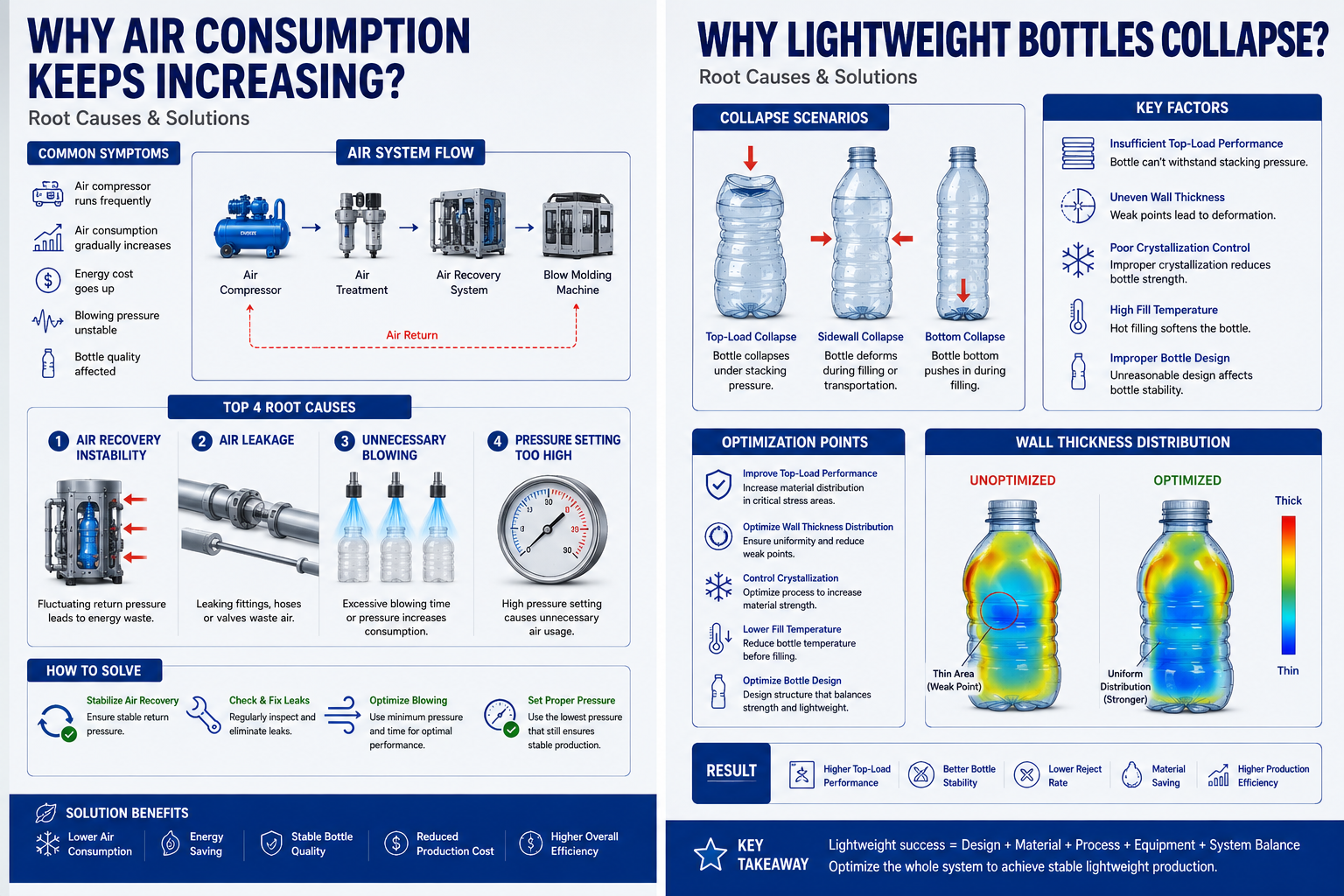
A: No. Servos save energy by replacing the low-pressure mechanical air used to move cylinders. To save high-pressure blow air (P2), you must pair servo mechanics with an integrated Air Recovery System (ARS), which BANGE builds directly into our premium product ranges.
Q: Is a full-servo machine more expensive to maintain if a motor fails?
A: While individual servo components carry a higher baseline cost than simple air cylinders, their lifecycle is up to 5 times longer. Total factory maintenance costs drop significantly due to reduced wear, fewer seal leaks, and automated digital diagnostics.
Q: What is the average payback period for upgrading to a full-servo machine?
A: For plants operating multi-shift high-volume lines, the combined savings from reduced compressor electricity, lower scrap rates, and reduced maintenance typically achieve full ROI within 12 to 18 months.
Q: How do servos save energy if they are constantly plugged into electrical power?
A: Unlike induction motors or pneumatic air lines that maintain continuous pressure/power draw, servo drives utilize intelligent power modules that scale consumption down to fractions of a watt the microsecond a movement stops.